How to Use Gamified Reading Habits Without the Pressure
Reading points can make progress visible, but they can also become another obligation if the score starts deciding what, when, or how fast you read. A calmer approach is to treat game elements as a record of time spent with books, not as proof that you were productive enough.
Scroll+ uses Nova, daily streaks, titles, avatars, and an optional weekly leaderboard. You sign in with Google once to use the app; after that, imported books can be read offline, and gamification data syncs when you are connected. Your book files are not uploaded for these features. If you want to know what stays on the phone, the private offline reader guide explains that separation.
1. Define a reading action small enough to begin
Choose a starting action such as opening the current book and reading one section. Do not begin with a heroic daily target. A small entry point lowers the cost of starting after work, during a commute, or while waiting somewhere.
The action should still make sense on a day when you have little time. If you continue, good; if you stop after the planned section, the session still counts as reading. Avoid changing the target upward every time you have an unusually free evening.
2. Treat Nova as a receipt for reading already done
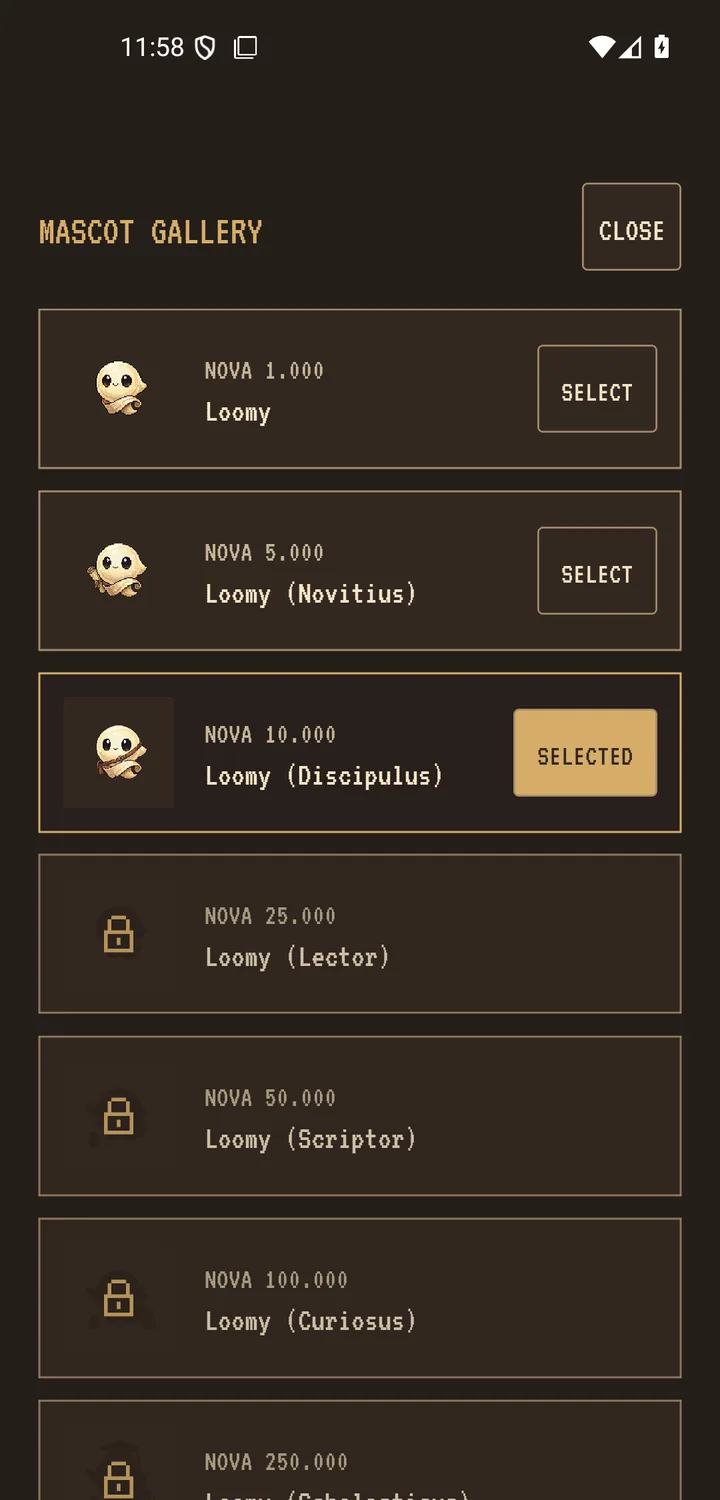
Scroll+ records active reading and turns completed activity into Nova. Titles and the set of 21 mascot avatars make accumulated progress visible. Use those unlocks as a retrospective marker that appears after reading, not as a reason to rush through a page.
Do not skim, swipe, or choose an easier book only to move a meter. That reverses the relationship between the reader and the game. If the current book needs slower attention, let it be slow. You can first tune the page with the Android reading-settings guide.
3. Let a streak describe continuity without creating debt
A streak says that reading happened on consecutive days. It does not say why a day was missed, and it does not erase earlier sessions. When a streak ends, restart with the next honest reading session instead of trying to compensate with an exhausting marathon.
One useful rule is never to read a book you dislike solely to preserve the number. Switch books, take a break, or let the streak reset. A measurement is helpful only while it supports the activity it measures.
4. Keep comparison optional
The weekly leaderboard compares Nova totals for registered accounts. Open it when friendly comparison feels enjoyable. Leave it alone when it makes you judge a reflective essay, a dense PDF, and a light novel by the same pace.
A private alternative is to notice your own pattern: which time of day makes starting easiest, which format feels natural on the phone, and which settings reduce friction. For travel days, prepare a low-friction local shelf with the offline travel-reading checklist.
Protect the reason you wanted to read
Gamification works best as a lightweight layer around the book. Start small, let Nova reflect work already completed, release streak debt, and opt out of comparison whenever it changes your choices. Missing a day is not a product failure or a personal failure; it is simply the next place from which to begin.